Tuesday, October 30, 2012

A Prairie Garden in the City


At the corner of High Street and Commerce Street, the two main commercial retail streets in Mineral Point, Wisconsin, I designed and planted a prairie garden for a client who operates an independent bookstore from the stone building. In October, the flowers are mostly gone, leaving pretty seed pods and glorious glowing yellow and russet foliage.
The repeating structural lines of prairie dropseed form yellow edges while the contrasting rust of the little bluestem forms a taller backdrop.  Yellow river birch leaves repeat the color, with deep brown seedheads of various serving as accents.  We leave the seeds on for the birds that some in fall and winter to feed on them.  Stone benches echo the stone walls around the gardens, as well as the stone walls of the historic buildings, and provide resting places for the visitors to the pretty little town.


Wednesday, August 8, 2012

Summer Mix


Mondarda (also called beebalm) and yellow coneflower mix in mid August

Thursday, July 19, 2012

Landscape Design Services

PlannedScapes Native Landscape Design

Karma Grotelueschen
Warrenville IL and Mineral Point WI
630-728-9998
plannedscapes @ aol.com (remove the spaces)

Full residential and commercial landscape design services using plants of the prairie and woodland to create functional and beautiful outdoor living spaces.
Complete landscape plans, quick sketches that the homeowner details with plant lists, or consultation.
Plans for entire properties that coordinate function and aesthetics to single area plans.

Serving the western suburbs of the Chicago area and the Madison, WI and Mineral Point, WI areas.

Lead Plant


Lead Plant

Amorpha canadense

2' to 3' tall
Fine blue foliage

Purple blue flower stalks
Interesting seed pods into winter

Some winters, stems overwinter so the new growth may be high on the stem.  If this is not desired, cut the stalks back to a few inches from the ground in winter.


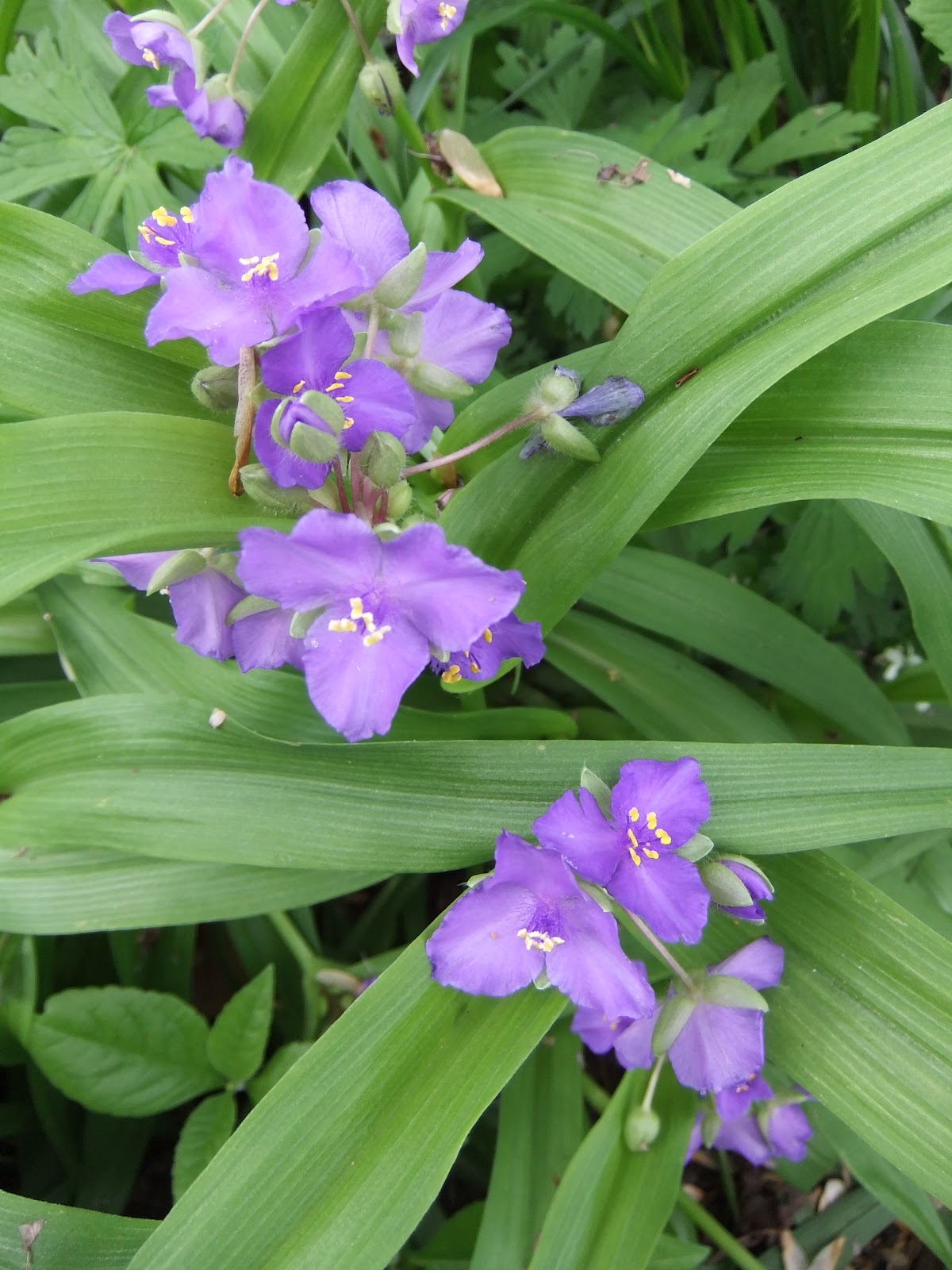
Spiderwort

 Spiderwort

Tradescantia ohiensis

1 to 1.5' tall
early blue flowers that open in the morning and dissolve into blue drops later in the day
so plant where they will be seen in the morning

will stay open longer on cool days

Prairie Coreopsis

Prairie coreopsis

Coreopsis palmata

1 to 2' tall, fine delicate foliage makes it a good plant to interweave among other short forbs and grasses

Tuesday, July 3, 2012

Lake Redstone House Landscaping, Early Summer, Year Three

Landscaping for Lake House - Update
Lake Redstone, La Valle, WI
The front yard is entirely prairie plants with Happy Returns daylily edging along driveway
In early July 2012 after many weeks with no rain, the plants are slightly smaller than usual for this time of year, but thriving.  
This landscape was planted starting in fall of 2009. The area was divided into curving triangular shapes that were outlined with 3" plugs of plants that had strong structural presence, such as prairie dock and stiff goldenrod.  The shapes between the outlines were left bare of plants and mulched at first.  This allowed installation of the garden in economical phases.  
The internal areas of the shapes were then planted in 2010 thru 2012.
Signs from Wild Ones and National Wildlife Federation identify this as a natural landscape.


Sunday, June 10, 2012

NATIVE PLANTS FOR BEGINNERS
Modified by Karma Grotelueschen, PlannedScapes Native Landscape Design
From list by The Greater DuPage Chapter of Wild Ones www.for-wild.org/chapters/dupage
Perennials for Sun (some can take part shade too)
Short—to 18”
Allium cernuum, nodding wild onion
Coreopsis palmata, prairie coreopsis *
Dalea (Petalostemum) purpurea, purple prairie clover
Dodecatheon meadia, shooting star
Tradescantia ohiense, Ohio spiderwort
Zizia aurea, golden Alexander
Medium—18” to 36”
Asclepias incarnata, swamp milkweed
Asclepias tuberosa, butterfly milkweed, prefers well drained soil, may not last in clay
Aster oblongifolia, aromatic aster
Echinacea pallida, pale purple coneflower
Liatris aspera, rough gayfeather
Liatris cylindrical, cylindrical gayfeather
Liatris pychnostachya, prairie blazing star
Parthenium integrifolium, wild quinine
Penstemon digitalis, foxglove beard tongue
Pycnanthemum virginianum, common mountain mint
Rudbeckia subtomentosa, sweet black-eyed Susan
Solidago ohiensis, Ohio goldenrod
Solidago riddellii, Riddell’s goldenrod
Tradescantia ohiensis, Ohio spiderwort
Tall—over 36”
Aster nova-angliae, New England aster
Baptisia leucantha, white wild indigo
Coreopsis tripteris, tall coreopsis
Echinacea purpurea, purple coneflower
Eryngium yuccifolium, rattlesnake master
Monarda fistulosa, beebalm, wild bergamot
Ratibida pinnata, yellow coneflower, gray-headed coneflower
Silphium laciniatum, compass plant
Silphium terebinthinaceum, prairie dock
Solidago rigida, stiff goldenrod

Grasses and Sedges for sun (some can take part shade too)
Short—to 18”
Carex pensylvanica, Penn sedge, common oak sedge
Carex vulpinoidea, brown fox sedge
Sporobolus heterolepis, prairie dropseed – best landscape edging grass
Medium—18” to 36”
Panicum virgatum, switch grass, can be aggressive so use sparingly
Schizachyrium scoparium, little bluestem, prefers well drained soil, may not last in clay
Tall—over 36”
Andropogon gerardii, big bluestem, can be aggressive so use sparingly
Sorghastrum nutans, Indian grass, can be aggressive so use sparingly

Perennials for Shade (some can take part sun too)
Aquilegia canadensis, wild columbine
Asarum canadense, wild ginger
Aster shorti, Short’s aster
Athyrium filix-femina var. michauxii, lady fern
Cimicifuga racemosa, Black cohosh
Geranium maculatum, wild geranium
Mertensia virginiana, Virginia bluebells
Podophyllum peltatum, Mayapple
Polemonium reptans, Jacob’s ladder
Polygonatum canaliculatum, Solomon’s seal
Sanguinaria canadensis, bloodroot
Smilacina racemosa, Solomon’s plume
Solidago flexicaulis, zig-zag goldenrod
Stylophorum diphyllum, celandine poppy

Grasses and Sedges for Shade (some can take part sun too)
Short—to 18”
Carex gracillima, purple-sheathed graceful sedge
Carex grayi, common bur sedge
Carex rosea, curly-styled wood sedge
Medium—18” to 36”
Chasmanthium latifolium, spike grass, Northern sea oats
Hystrix patula, bottle-brush grass
Shrubs for Dry Soils
Corylus americanus, American hazelhut
Lonicera prolifica, yellow honeysuckle
Rhus aromatica, aromatic sumac
Rhus aromatica “Gro-Low”, cultivar for use where low landscaping is needed
Viburnum acerifolium, maple-leaved viburnum

Shrubs for Medium Soils
Aronia melanocarpa, black chokeberry
Hamamelis virginiana, witch hazel
Hamamelis vernalis, spring witch hazel
Rosa setigera, Illinois rose
Rubus odoratus, purple-flowering raspberry
Sambucus canadensis, common elderberry
Viburnum dentatum, Arrowwood viburnum
Viburnum prunifolium, black haw viburnum

Shrubs for Moist Soils
Cephalanthus occidentalis, buttonbush
Cornus stolonifera (sericea), red-osier dogwood
Lindera benzoin, spice bush
Physocarpus opulifolius, ninebark

Small Trees for Colorful Accent
Amelanchier laevis, Allegheny shadblow
Amelanchier grandiflora, Serviceberry
Carpinus caroliniana, musclewood (moist)
Cercis canadensis, red bud
Cornus alternifolia, pagoda dogwood

Large Trees for Making Shade
Acer saccharum, sugar maple
Acer rubrum, red maple
Gymnocladus dioica, Kentucky coffee tree
Liriodendron tulipifera, tulip tree
Quercus macrocarpa, bur oak
Quercus muhlenbergii, chinquapin oak
Taxodium distichum, bald cypress (moist)
Tilia americana, American linden, basswood

Tuesday, November 8, 2011


Prairie Fire


A limited edition block print celebrating fire that helps maintain and sustain a prairie. Used by native peoples to keep woodland from overgrowing a prairie, fire favors abundant grass growth that would have attracted roaming herds of bison. Fire keeps 'weed' woody seedlings out, burns off accumulated dried grasses, returns nutrients stored in dead plant material to the soil, and exposes and blackens the soil so that it warms earlier in the spring so that prairie plants can get a head start on growth. It is in those years after a burn that the grasses grow their tallest. The print features the three parted seed head of big bluestem, the low creeping flames of a typical prairie fire moving toward the dried tops of stiff goldenrod and prairie dock and milkweed, and at bottom, the dense seed sprouting that can happen on the prairie floor that allows for prairie rejuvenation in the summer after a burn.

Saturday, July 31, 2010

A Small Backyard Prairie Garden

A small backyard in Wisconsin is a combination of woodland and prairie plants. Near the back door, in the shade of an adjacent building, woodland plants and heirloom perennials from previous owners share space around small patios for dining and relaxing. A path from the backdoor winds the length of the garden and ends in stairs along stone terraces that transition down to the parking level below. This newest section of the garden is in full sun and has very poor sandy soil, but tallgrass prairie forbs thrive there, including prairie dock, fragrant mountain mint, pale purple coneflower, and swamp milkweed.


Tuesday, June 22, 2010

Urban Prairie Garden in June - Second Year


 In Mineral Point, Wisconsin, at the corner of the two busiest retail streets, there is a building that was formerly a Mobil gasoline station and recently, a mechanic's garage.  A local entrepreneur cleaned up and added on to the building and replaced the pavement out front with gardens.  PlannedScapes was hired to design and install this prairie and perennial garden.

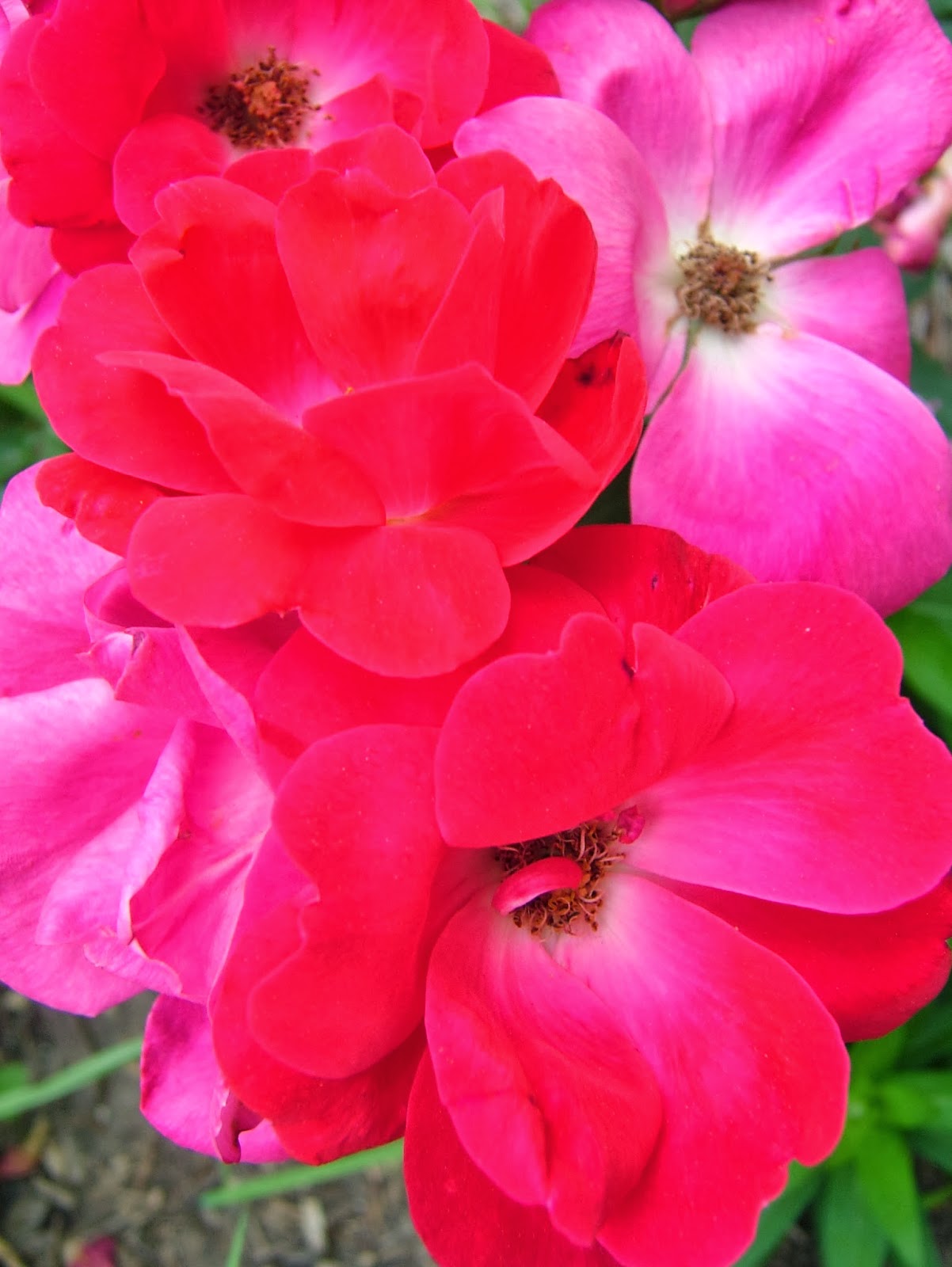
About 80% of the plants in this highly visible urban garden are prairie plants, but since they do not kick into high bloom until July, a couple reliable non-native perennials keep things colorful during the month of June.  Happy Returns daylily takes turns edging the street side and the internal sidewalk with prairie dropseed grass, and a shrub rose adds a hot contrast to the soft yellow of the daylily. The prairie coreopsis and spiderwort are a couple of prairie plants that are showing some color.  About the time these plants take a rest from flowering, the leadplant and purple and pale purple coneflowers and swamp milkweed and mountain mint and rattlesnake master and other early summer flowering prairie plants will be ready for their show, followed by the taller yellow coneflowers, prairie dock, and sky blue asters.


Thursday, February 18, 2010

How We (Should) Landscape - Outline

How We Landscape

Lawn – after the house is built, the property is seeded or sodded
Accesorized with beds – Foundation, Corners, Island

Terrible because
-Lacks Functionality
-Lacks Aesthetic Cohesiveness
-Lacks Environmental Responsibility
----Exhaust, noise, fuel use, time use to mow
----Potentially invasive plants
----No habitat

Why Lawn? Conformity, yes: presumes lawn exists to conform to
Why Lawn? Visual Calm - relief from clutter
----Instincitvely seen as safe, therefore relaxing

How to achieve Visual Calm without turf grass?
Masses of any single plant
Naturally occurs: Overstory of forest, colonies, wind spread seed

Old way: Default is lawn, beds designed (accessories)
New way: Default is native prairie & woodland, lawn shape is designed as accent
Future goal: Lawn replaced by mass of native prairie or woodland plants

Function
-Living Spaces
-Circulation: Moving between drive, house, & living spaces
-Enclosing the property and the living spaces
-Screening and distracting

How We (Should) Landscape - Full Article Text

Take a walk or drive through almost any subdivision in any town or suburb or even rural area today and you will see the sad sad state of landscape design. We build a house, we level the land, we bring back a token layer of topsoil, then we sod it over or seed it to turf grass. At some point when we build up enough financial reserve from the devastation of the mortgage, we "landscape" the place. That means we put a few things around the foundation of the house, we plunk a couple shade trees into the lawn, and we plant a couple corner beds to mark our turf so we can point out the perimeters of our plot of land to visitors from inside the house. We never go out there, except to mow, which we do regularly every Saturday morning for the rest of our lives. If we are really adventuresome and fancy ourselves hobby flower gardeners, we add an island bed almost all the way out in back and put in some perennials and some ornamental grasses and a bird bath on a pedestal.
What is wrong with this picture?
Well, a first clue should be how much time we spend out there. If all we do is mow, our yard is not very functional, is it? There are oh, so many things one can do outdoors in ones own yard, and if all we are doing is mowing it, we are missing out on opportunity. It's kind of like having a room in the house that sits empty, never used except to vacuum it once a week. Another issue is that for all the money and time spent on it, it is just not that attractive. In fact, some might go so far as to call it boring, bland, lifeless. There is so much more that could happen out there visually. And finally, it is an environmental train wreck. That weekly mowing not only wastes time, but it wastes energy. The mower uses fossil fuel, pollutes the air and water, and causes noise pollution. We might even put chemical pesticides and chemical fertilizers on it. That turf grass contributes to flooding and water pollution, because instead of allowing rain water to soak into the ground, that rain water flows off to the nearest storm sewer. It takes along any chemicals that have washed onto the soil, rushing to the nearest stream to the nearest river. That extra water flow wreaks havoc on the waterway in may different ways, from adding nutrients to polluting it to making its level fluctuate artificially.
The possibility exists that some of those plants might be or might become invasive. Certainly the big drive to landscape with ornamental grasses has caused some of the non-native species to escape into natural areas. There, they compete with the native plants and damage ecosystems. Burning bush and many of the creeping groundcovers have become such pest plants. These unnatural plantings do not serve as home for critters of any type. In presettlement times, each plot of land supported a diverse interacting set of plants and animals. Native ecosystem provided shelter and food for birds, reptiles, amphibians, insects, spiders, and a wide array of soil organisms. Turf grass lawns with shrub and perennial borders are not able to serve as habitat, creating a lifeless landscape.

So how did we get here? Why does every landscape begin and end with vast expanses of turf grass lawn? Your first answer might be conformity, because making our yards look like every other yard in the neighborhood is an important factor. But this presumes there is lawn to conform to, and so, how did we get to that point? Well, our instinctive preference is NOT for grass or turf specifically, but for something that is visually calming. We crave visual relief from the clutter of too many different sized plants, sheds, decks and houses. This visual relief reads as "safe" to us. Lawn is a simple cheap way to provide a calming non-challenging blandness to our landscape. So, if we are to give up the lawn and its subsequent mowing and other bad habits, how can we achieve visual relief? With masses of any single plant species. A mass of a low prairie grass is an obvious choice, but there is nothing magical about the visual relief of grass. The mass can be any perennial plant or any shrub or even a wall of the same kind of ornamental trees. This aesthetic occurs naturally in the secessional canopy of a forest that might be mainly maples or widely spaced oaks. It occurs in a prairie where a species of forbs has spread by root into a wide area. It occurs in a woodland where there might be acres of wild geranium or wild ginger or trillium, which have spread into a colony over many years. It occurs in a prairie where wind spreads the seed into a long broad oval. Our impulse as consumers is to buy one of this and three of that, but using the mental discipline of making the entire back property line all the same black chokeberry or serviceberry goes a long way toward achieving the visual calm that the lawn provides.
Next to the prevalence of the lawn, our next big mistake is how we design our spaces. We make lawn accessorized by beds. The little corner beds and the foundation beds are "designed" and then everything else defaults to lawn. In the environmentally sound landscape, we have to turn that habit on its head. We have to design the little token lawn FIRST, then default everything else to native plants. Native plantings becomes the default instead of lawn. The landscape is now one of native plants from various local ecosystems with a little plot of lawn as an accessory to provide that local conformity. As the compliments come in and local acceptance grows, we may then finally convert that patch from turf grass lawn into a meadow of a native plant species, such as a prairie grass or a woodland wildflower that has persistent foliage.
Within that default expanse of native plants, we fit our functional living spaces. We should begin by considering how we spend our day, and then try to move as many of those activities outdoors. We dine, we relax with family, we do crafts, we play games, we work on our computers. So we will place around the landscape little rooms for various functions. Between those spaces, we will put paths. For people arriving at the front driveway, circulation should be provided to a living space in the back yard. Paths should link all doors to the house to the living spaces, and should link each outdoor living space to the others. There should be some paths that are just for strolling among the interesting and beautiful plantings. The living spaces need enclosure. The size and shape of the living space will be defined by the arrangement of its furnishings and the size and shape of the floor under them, and then around that "room", walls need to be added to box it in. Walls can be the trunks of shade trees that also provide ceiling with their branches. Or they can be ornamental trees that are left to grow limbs in a natural form all the way along the trunk instead of being limbed up. Walls can be shrubs or even the tallest of the prairie plants, such as Indian grass and cup plant. Once the living spaces are defined and enclosed, there might be additional areas at the perimeters of the property that need some enclosure. And there may be views that are not pleasant that should be screened with taller plants. Then the remaining area is filled in, with shorter shrubs and prairie grasses and forbs in the sunny areas and woodland understory plants in the shady areas. Now there is shelter for wildlife, perches and nesting sites for birds, flowering plants with nectar for butterflies and hummingbirds and the many native species of bees. There will be seeds for winter birds and small animals. What was once hostile sterile lawn is now fertile and diverse and on its way to becoming ecosystem.

How We (Should) Landscape - Diagrams

The pathetic state of landscape design means much of what is out there looks like this:
The default is turf grass lawn, accessorized with foundation plantings and a couple perimeter beds and shade tree here and there.


The future of landscape design should be a default of native plants from local ecosystems.
If there is to be any turf at all, that should be designed as an attractive simple shape, with all other land dedicated the default of native plants.
The native planting are should contain the functional ares.
This example has a living/dining space that would have a large picnic table to also be used for family games and crafts and computer use, and a smaller seating area for relaxation and conversation that would have perhaps an L shape of two benches. Paths connect the living spaces, the house exit doors, and the front drive for arriving guests.

Enclosure of the living spaces and screening to provide privacy and hide ugly views fill in the planting areas.
Tall shrubs and ornamental trees provide walls for the living spaces and to enclose the property as a whole. Remaining areas of the planting space are filled in with prairie grasses and forbs in the sunny areas and woodland understory plants in the shady areas. Native plants with especially pretty flowers or interesting leaf form or attractive seed heads can be planted to provide aesthetically pleasing views from the house and the living spaces and along paths.

Not everyone can afford the time or money to do such an extensive project at once, but having a design of the entire area allows the phasing to be done intelligently.
Key living spaces might be given priority to allow functional use of the outdoors as soon as possible, with other areas filled in as time and budget allow. An ideal last phase, after the native landscape is admired and accepted by the neighborhood, would be to replace the turf grass shapes with a mostly single-species mass of a native plant. Prairie dropseed or little bluestem would make a nice visually calm mass if there is enough sun, or wild geranium or wild ginger could be used if the area has become shaded by trees.

See the separately posted article under the same title for a detailed discussion of the topic of designing the landscape in an environmentally responsible manner with native plants.

Syllabus and Homework for YOUR Course in Natural Landscaping

Natural Landscaping 101 Self-Study Course

+ Learn what 'native plant' means and the various subtleties of the concept.
+ Learn what plant ecosystems are native to your area. I presume tallgrass prairie in this document, since I landscape in Illinois and Wisconsin, so you will need to adapt for your region.
+ If you live in a tallgrass region, learn about the plant layers of the prairie, savanna, and woodland.
+ Learn about rainwater runoff and how turf grass compares to prairie.
+ Learn the distinctions between 'natural landscaping', 'environmentally sound landscaping', and 'native landscaping'.
+ Learn reasons 'native' is good and non-native is bad.
+ Learn why chemical pesticides (herbicides and insecticides) are bad and also, some exceptions when their use may be justified.
+ Learn the distinction between 'restoration' and 'recreation'.
+ Learn about landscape installation methods and the debate on the merits of various methods.
+ Hike in prairies and woodlands, observing the arrangements and relationships of the plants and the specific species.
+ Find guided tours of natural areas and listen and ask questions.
+ Volunteer at a seed gathering event at a local natural area.
+ Volunteer at an invasives removal event at a local natural area. "Brush cutting" or "buckthorn removal" are a couple such events.
+ Learn what attracts wildlife: Birds, butterflies, bees, other insects, mammals, reptiles, amphibians.
+ Learn about prairie and woodland fire ecology and how to use fire as a maintenance tool.

Living In Your Outdoors

You own it, so you should use it. You should have a variety of living spaces in your back and even front yards and you should spend as much time as possible out there living in it.A first step is to spend a few weeks paying attention to how you spend your time. What do you do when you come home from work? How much time to do you spend at the kitchen table dining with your family? What do you and various family members to after dinner? How do you spend your at-home time on the weekends?This will give you a list of things that you might want to do outdoors. Once you have this list of outdoor functions, sort the list into things that require similar furniture.
Reading a book might require a bench, but conversing with friends might require an L-shape of two benches. Playing chess or checkers would require a 'coffee table' between them. Now you have small, relatively private living space that can serve multiple needs. Dining requires a large table and chairs, but it is also a space that you can do crafts on or where several people can play games. If several of you work on computers in the evening, can you provide wireless Internet or cable access and electric access so that you can gather outdoors at the dining table?
If you have read about landscape design, you might have read a directive to put the dining area no more than a few feet from the back kitchen door. But what tends to happen in this arrangement? We dart out to grill our dinner, we eat it on the adjacent dining table, then we duck back indoors for the rest of the evening. We only see the plants that we can see from our deck or patio. What if that living space designated for dining is in a far back corner? We will spend more time packing up the food and dishes and condiments to get it out there, but we will probably develop a caddy of some sort for that which we keep stocked and handy. And once we are out there, we will have 'moved' out there and so we will linger. We might run back in for a magazine, or we might bring the laptop computer with us when we bring out the dining kit. We might get up and stroll through the plantings and return to converse with family for a while. We might linger so long that we decide to install some pathway lighting. We might linger so long that we decide to build some screened walls around the space to protect us from the mosquitoes at dusk and add a ceiling so that we can linger even in the rain.
There are two key ingredients to living more of your life outdoors. One is thoughtfully planning out the spaces where you can do the things you like to do in an outdoors setting. The second is getting into the habit of getting out there and staying out there. It takes a bit of planning and some effort to make these things happen, but once you begin to spend more of your time outdoors, you begin to appreciate the subtlety of nature more fully. Instead of seeing the flower when it is in full glorious bloom, you will notice the buds and look forward in anticipation of the day they open. You will notice the flowers turning into seed heads or seed pods. You will notice the seed pod opining to release the seeds.
The more time you spend outdoors, the more you then spend quiet time out there, and that leads to the wildlife becoming used to you as a part on their habitat. You will see hummingbirds and bees coming to the flowers for their nectar and notice the different flight patterns of the many kinds of native bees. You will see spiders forming their webs if you stay long enough. Birds get used to you and come in close to get the plant seeds or grab a bit of dried leaf from the ground to line a nest. If you are quiet enough and lucky, you may see raccoons, skunks, foxes, coyotes, opossums, and other animals make their rounds in your yard.
You will come to experience your own piece of nature as a part of it and not just a distant observer, as you watch the day pass into dark and the plants change through the seasons and you will enjoy new dimensions of nature in your very own back yard.
And in winter, your garden spaces will serve as hopeful reminders that spring and green will return, and you will be able to return to living outdoors.  So make sure you can see one of them from a window to keep you thinking outdoors all year long.